The Red Route no longer serves front campus; smaller buses are replacing larger transit vehicles, and the Weekend Dining Shuttle has returned.
Carrollton, Ga -The University of West Georgia has implemented several changes to campus bus operations as officials work to improve efficiency and reduce transportation costs. According to Assistant Vice President of Auxiliary Services Charles Cruey, Parking and Transportation is adjusting vehicle usage and monitoring ridership trends to better meet student transportation needs. “There really haven’t been any changes to the route since before COVID, but gradually we’ve been changing over the fleet,” Cruey said.
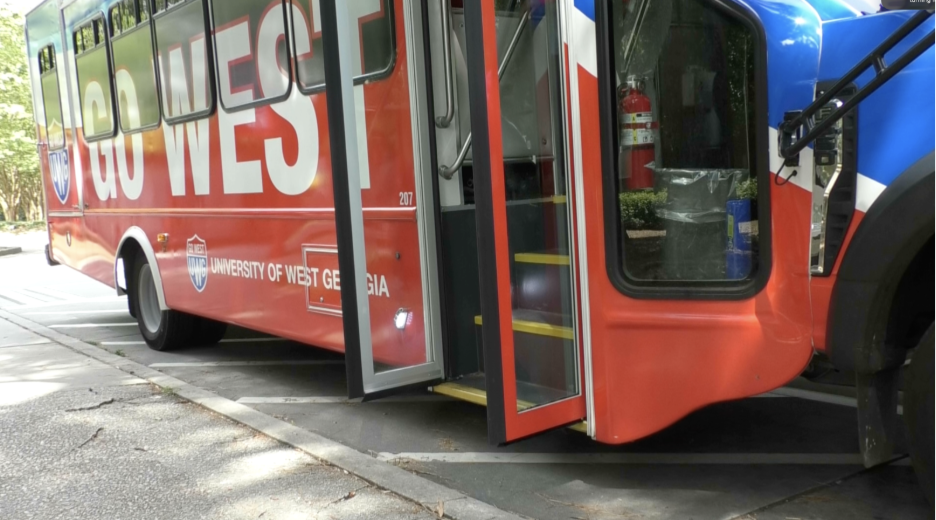
One of the most noticeable changes for students is the replacement of larger transit buses with smaller cutaway buses. The university purchased four newer buses last year as part of its effort to modernize the fleet and reduce operating costs. “The reason is they’re cheaper to operate, they’re more reliable, and with diesel prices the way they are, there was no foreseen way to keep costs down without changing over to gasoline,” Cruey said.
University of West Georgia shuttle bus travels along a campus route in Carrollton, Georgia. Photo taken on 10/07. Kairo Jonah Bristol
The previous buses carried approximately 30 to 40 passengers and offered standing-room capacity, while the newer buses seat between 15 and 25 riders. According to Cruey, the older diesel buses are nearing 17 years of age and have become increasingly expensive to maintain. “The only thing we did change is they used to drive up Front Campus Drive, but nobody was using it at all,” Cruey said.
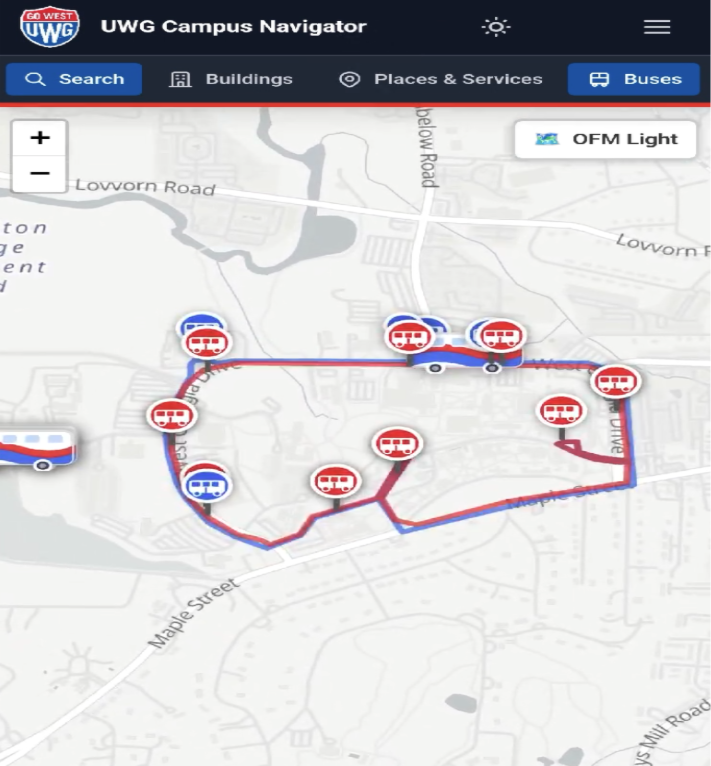
Another operational change involves the Red Route’s removal from Front Campus Drive. Transportation officials determined the segment was unnecessary because there were no active stops and little rider demand. Buses now continue along Maple Street instead. “There’s no stop for anybody to get off on there, so they just continue on Maple Street,” Cruey said.
Students who previously relied on front campus access are encouraged to use nearby stops served by the Blue and Red Routes, including locations near Aycock Hall, Richards Hall, Row Hall, East Commons, The Oaks, and the Campus Center. Campus Navigator remains available to help students locate active stops. “That allows us to understand capacity and throughput,” Cruey said.
The department has also introduced automatic passenger counters to better monitor ridership patterns and ensure transportation resources are being used effectively. The data allows the department to track rider volume and identify areas where service adjustments may be needed. “I think if students are feeling any impact to the bus routes, it’s the volume of traffic slowing down the buses,” Cruey said.
While some students may notice delays, officials say congestion on campus roads is a greater factor than route changes. Traffic volume throughout the day can affect shuttle arrival times despite schedules remaining largely unchanged. “We took away the dining shuttle on the weekend, but we brought it back, and so that’s back in play now,” Cruey said.
The university has also restored the Weekend Dining Shuttle, which provides transportation between west-campus residential areas and East Commons during weekends when classes are in session. The service was reinstated after recognizing continued student demand for weekend dining access. “The shopper shuttle has seen a significant bump, probably three times the usage of last year,” Cruey said.
In addition to regular shuttle services, the Shopper Shuttle has experienced substantial growth this academic year. According to Cruey, increased on-campus housing occupancy has contributed to higher demand for transportation to local stores and shopping centers. “With this increase in students living on campus, we’re seeing a lot more of that need and use,” Cruey said. Students can track buses in real time through Campus Navigator, the MyUWG app, and GoWest. These resources provide route information, estimated arrival times, and live bus locations for university transportation services. “That tells you where the shuttle is and shows you on a map how close you are to that bus,” Cruey said.
University officials encourage students to utilize these tools to stay informed about route updates and current bus locations across campus.